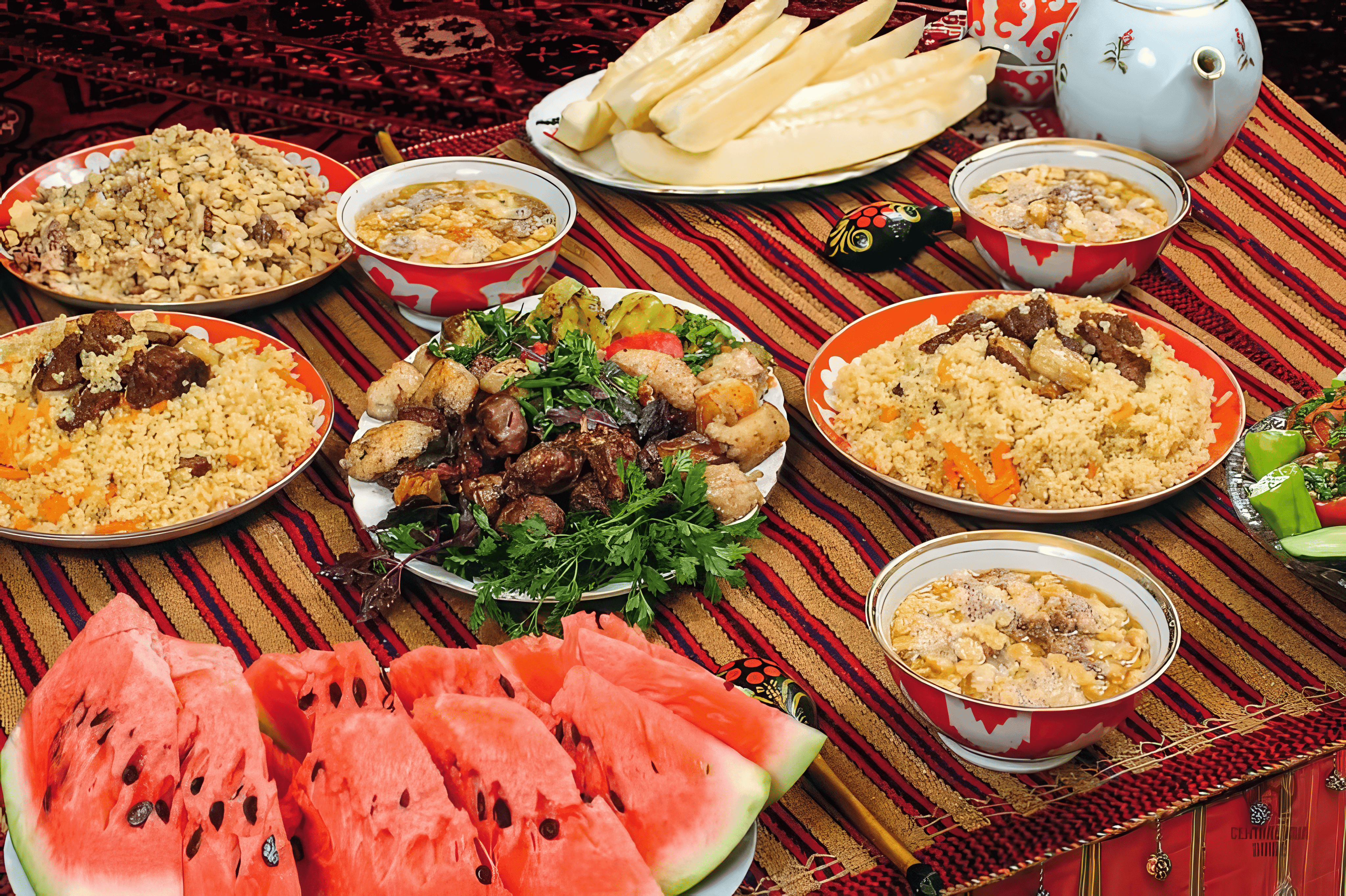
Taste local specialties like plov and traditional bread, dishes rooted in regional ingredients and long-standing traditions.
Traditional Cuisine and Local Flavors in Turkmenistan
Turkmenistan’s cuisine reflects the rhythms of land, climate, and history. In a region dominated by deserts and steppes, meals are built around simple, nourishing ingredients. For many visitors, the food becomes a way to understand the country’s culture and daily rhythms, revealing a side of life that sits beside its historical sites and natural landscapes.
Meals Shaped by Geography and Tradition
The foundations of Turkmen food are practical and hearty. Lamb, rice, wheat products, and dairy feature prominently. These ingredients are often combined in ways that have changed little across generations, grounding meals in the demands and resources of the land.
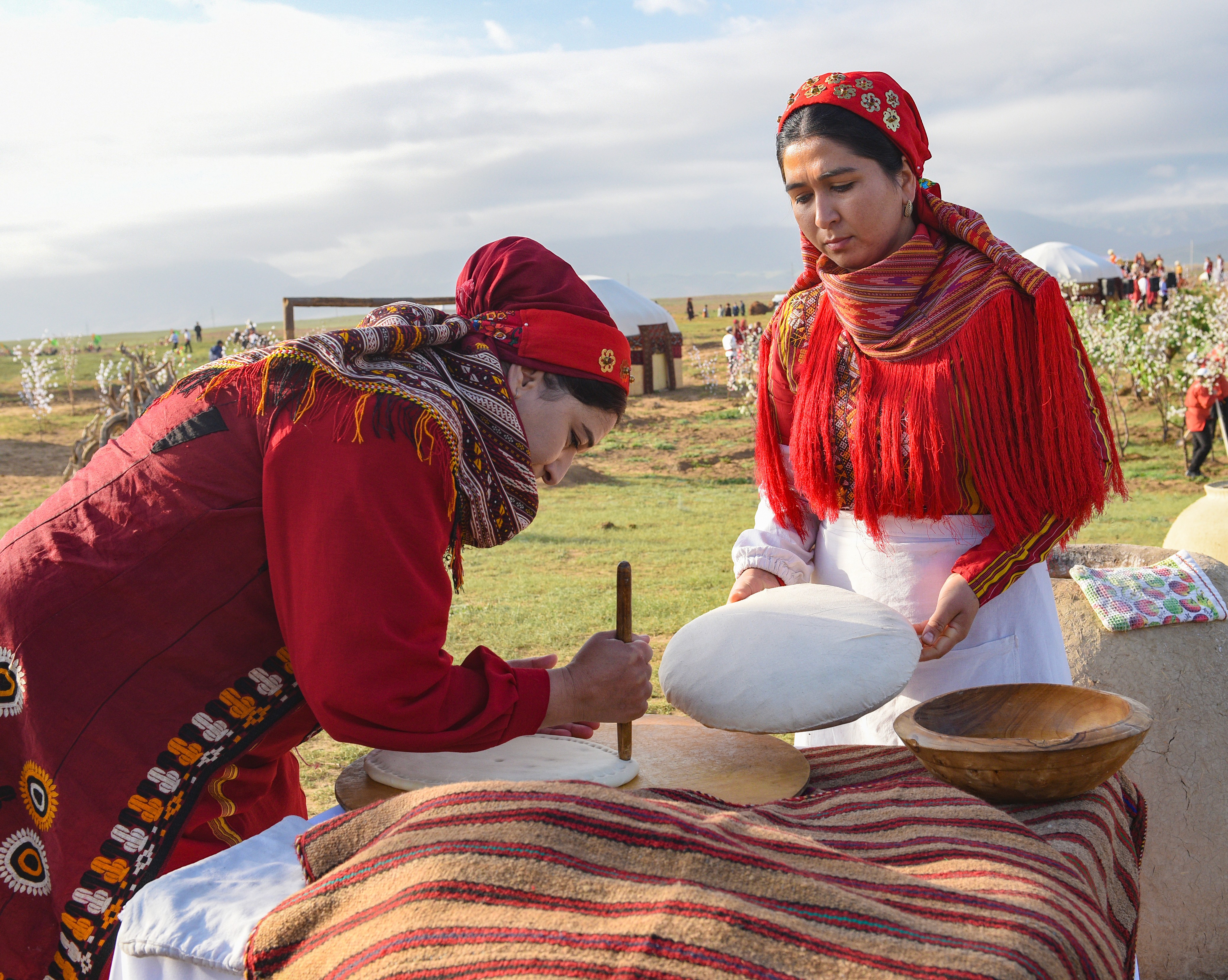
Bread holds a special place in Turkmen cooking. Known locally as chorek, this flatbread is commonly baked in clay ovens called tandyrs. The process of preparing and sharing bread is woven into daily life, part of both family meals and formal gatherings. Bread often appears at the center of the table, symbolizing sustenance and hospitality in a society that places value on communal meals.
Signature Dishes and Everyday Plates
A dish that often greets travelers early in their visit is plov. This rice preparation, cooked with tender pieces of meat and vegetables, is familiar in various forms across Central Asia. In Turkmenistan, plov is served on many occasions, from casual lunches to celebrations. The texture and aroma differ from region to region, but its presence on the table is constant.
Another staple is manty, steamed dumplings filled with seasoned meat and onions. These tender parcels are usually served with yogurt or a simple sauce. The dish is especially popular in cooler months and offers a straightforward, comforting flavor that reflects the rhythms of everyday eating.
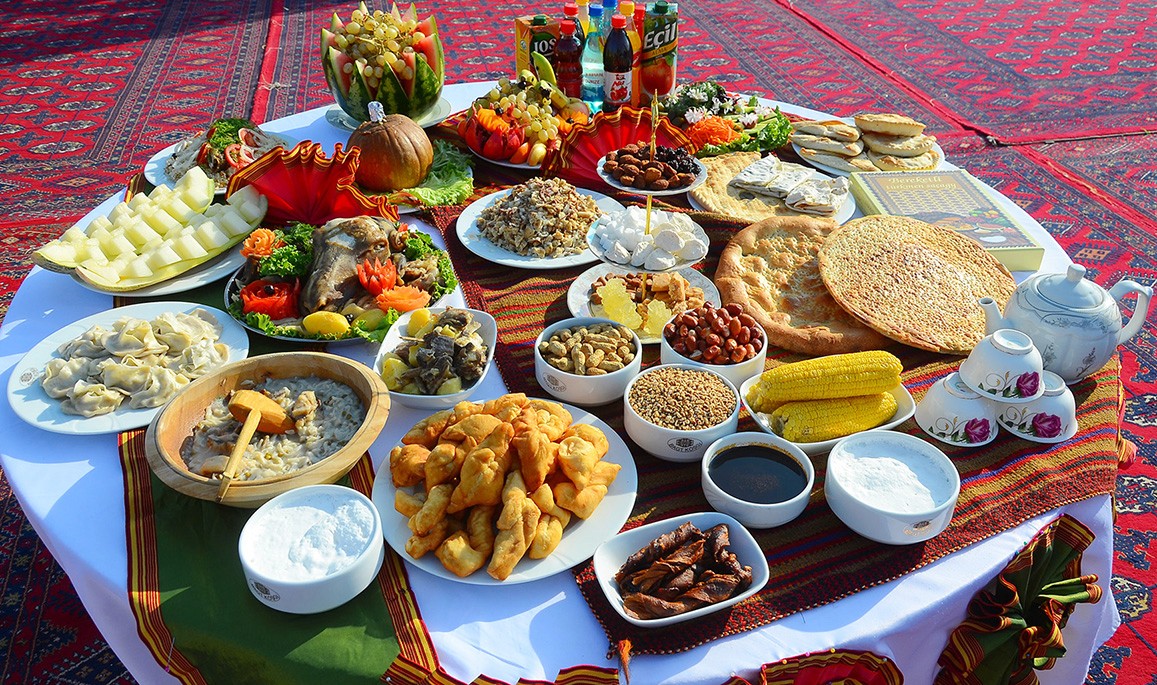
Meat prepared on skewers, often referred to by visitors as shashlik, is commonly found in markets and family gatherings. Grilled over charcoal, the meat carries the earthy simplicity that characterizes many Turkmen preparations.
Dairy products also play a role. Yogurt and soft cheeses accompany meals, and in some parts of the country, milk-based drinks and fermented products are served as refreshing complements to rich dishes.
Hospitality at the Table
Eating in Turkmenistan is as much a social experience as a culinary one. Hospitality extends beyond a simple meal. Guests may be welcomed into homes for tea or dinner, where recipes are passed down through families and shared with pride. It is customary for hosts to insist that visitors taste multiple dishes, and refusing an offer can be viewed as impolite.
Tea, often black and served with sugar cubes or sweets, is a near-constant presence in social settings. The ritual of pouring and sharing tea marks conversation, negotiation, and relaxation alike. In this way, food and drink become not just nourishment but a form of social cohesion, bringing people together across generations and settings.
Markets, Street Food, and Regional Variation
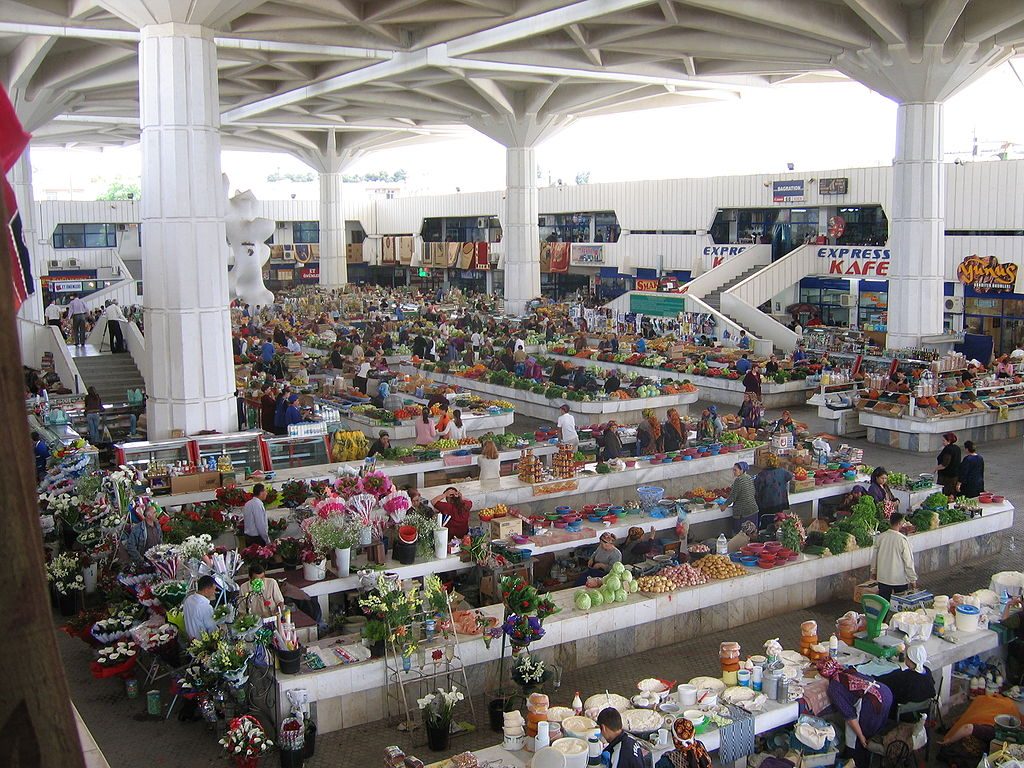
Local markets offer some of the most vivid experiences of Turkmen food culture. Stalls are filled with fresh seasonal produce, dried fruits, nuts, and an array of breads and pastries. Vendors often offer small samples, and the sights and smells present an immersive introduction to regional flavors.
In larger cities, small eateries and street vendors serve quick meals that reflect a blend of traditional and practical cooking. These places offer visitors a chance to observe how food functions in daily life, not just on restaurant menus but on the go.
While many dishes are common across the country, regional nuances exist. Proximity to water sources such as the Caspian Sea introduces different seafood elements in western parts of Turkmenistan, and some seasonal ingredients highlight local variations in recipes and preparations.
Food as a Window into Culture
Traditional cuisine offers visitors a perspective on Turkmenistan that extends beyond historical sites and scenic landscapes. Meals here are a reflection of climate, geography, and community values. They are places where conversation flows as readily as tea and where sharing food is a gesture of respect and engagement.
For travelers, exploring local cuisine is a practical and memorable way to understand the rhythm of daily life. Whether tasting plov in a home, sampling bread straight from a clay oven, or pausing for tea in a market stall, food becomes a bridge between visitor and place — an entry point into the routines and traditions that shape everyday experience.